
Blog · New Construction
West Valley Homebuying: New Construction and Resale Tradeoffs
The two ways to buy a West Valley home compared on the things that actually differ: condition, timing, inspections, costs, warranties, incentives, representation, and contingencies. No winners here, just the tradeoffs.
 By Andrew Texidor Realtor · Founder, Clearly Sold Updated October 8, 2026
The direct answer
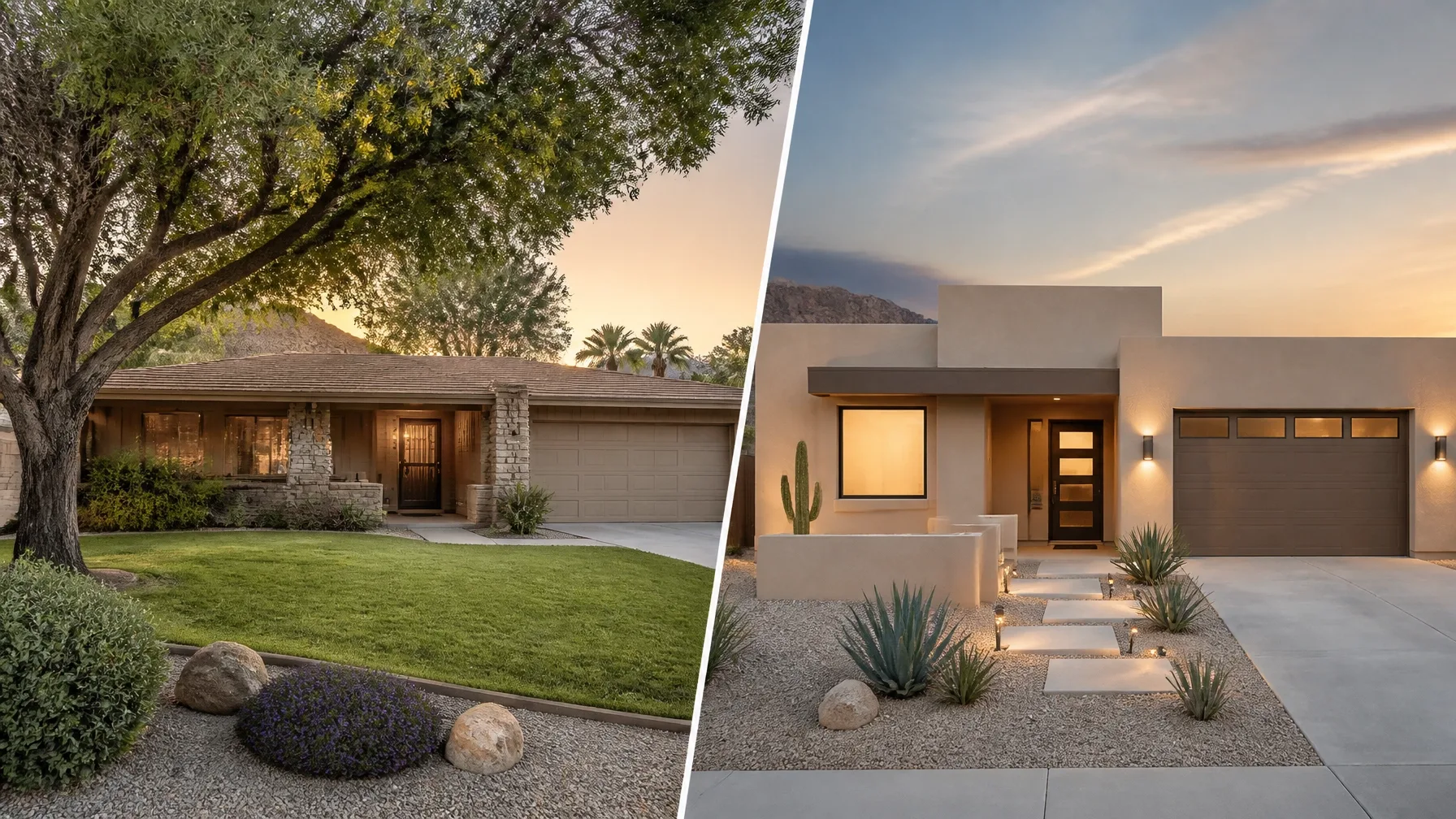
Buying new and buying resale in the West Valley are two different products with different tradeoffs. New homes offer modern systems, builder incentives, and a limited warranty but require waiting for construction, deciding upgrades under time pressure, and reading builder contracts carefully, and they may carry CFD assessments. Resale homes are finished, tour-ready, and negotiable over condition and price, but their condition depends on age and maintenance, and their inspections may surface needed work. Neither is inherently better; the fit depends on your timeline, budget, and tolerance for risk.
Key takeaways
- New construction and resale are genuinely different products: new homes trade upfront customization, modern systems, and builder warranties against build timelines, change orders, and an unfinished neighborhood, while resale homes are finished, inspectable, and negotiable on condition and price.
- Condition is a difference of degree, not of kind. A new home can still have defects, and an older home can be in excellent condition. Independent inspections matter on both sides, because neither 'new' nor 'resale' is a defect-free category.
- Timing and contingencies differ: buying new means waiting for construction and reading a builder's schedule and contract language, while resale has a defined closing date and inspection and financing contingencies you can negotiate.
- Costs differ line by line: new-home pricing typically includes base price, lot premium, and upgrades, and may add a Community Facilities District (CFD) bond assessment; resale pricing is negotiated around the home's condition, age, and the seller's situation.
- Incentives and registration rules are builder-specific and change often. There is no uniform rule that registration determines representation in Arizona, so verify each builder's registration, incentive, and warranty terms in writing before you commit.
How do condition and inspections differ between new and resale?
Condition is a home-by-home fact, not a category label. A resale home's systems and finishes have years of use behind them, and some have deferred maintenance; a new home has new materials and no prior occupants, but new construction has its own defect risk, from foundation and framing issues to punch-list items the builder never finished.
The practical response is the same on both sides: inspect. Resale buyers use the inspection contingency to review the home and negotiate repairs or credits. New-home buyers should arrange an independent inspection before closing or before the builder's warranty windows close, and many states, including Arizona, use the concept of a limited statutory warranty on new homes, but the scope differs by builder and contract.
Ask each builder exactly what its warranty covers, how long the coverage lasts, and when the clock starts, and get the warranty document in writing. Do not assume a new home is defect-free; that is exactly the assumption an inspection is meant to replace.
How do timing and completions compare?
Resale has a fixed closing date negotiated into the contract, usually 30 to 45 days out, with deadlines for financing, appraisal, and inspections. New construction runs on the builder's schedule: a completion estimate that can slip with weather, supply, and labor, and a closing that happens when construction finishes, not when you pick a date.
If your move date is fixed by a lease, a school year, or a job start, that date should drive the comparison. If the home itself matters more than the month you move in, the builder's timeline becomes less important.
Timing questions to ask
- What is the builder's current estimated completion date for this phase and lot?
- What happens to my rate lock and deposit if construction is delayed?
- Is the model I am touring the same builder grade and option set as my home?
How do costs break down on each side?
New-home pricing is a stack: base price, lot premium, and every upgrade you select, from cabinets to flooring to a pool. It is easy to fall in love with a model home that carries tens of thousands of dollars in upgrades, so the price of the exact home you buy, with your selections, is the number to compare. Many West Valley master plans also carry a Community Facilities District (CFD) assessment for infrastructure, which appears on the property tax bill separately from the HOA, and both the CFD and the HOA should be quoted for your parcel and term.
Resale pricing is negotiated around the home as it stands: its condition, its updates, its location within the neighborhood, and the seller's motivation. You can inspect a resale home before you commit, and repairs and credits are part of the negotiation, which is a different kind of cost control than choosing every finish.
Run the same monthly model for both: purchase price, property tax (including CFD for new homes), HOA, insurance, utilities at realistic summer usage, maintenance reserve, and how long you plan to own. Only then are the two options on the same math.
What about warranties, incentives, and representation?
New homes typically carry a builder's limited warranty covering defined systems for defined periods, and Arizona law provides a limited implied warranty on new homes. The details live in the builder's warranty document and the purchase contract, and they vary by builder. Resale homes sell with what the sellers disclose and what the inspection finds, which is why the disclosure statement and the inspection report are your warranty.
Incentives change constantly: rate buydowns, closing cost credits, appliance packages, and lot perks appear and disappear with market conditions. Get every incentive in writing, dated, and attached to the exact purchase agreement. An incentive you are told about verbally but cannot see in the contract does not exist for your transaction.
On representation, the rule is builder-specific: each builder sets its own registration process that determines whether your agent is compensated. There is no universal rule that you must register before your first visit, or that registration locks you into builder financing, so verify the current practice in writing with the specific builder before you step into the sales office. The builder's on-site staff represents the builder; if you want someone whose duty runs to you, that is your own agent's role, decided before you talk to the builder.
What contingencies should you expect to see?
Resale purchases typically include a financing contingency, an appraisal contingency, and an inspection contingency, with deadlines set in the contract. New construction contracts are builder-drafted and lean the other direction: deposit terms, change-order rules, delay provisions, and financing language are all the builder's form, and the buyer's protections depend on what state law provides and what you negotiate.
- Read the builder's contract for change-order pricing and approval windows before you select upgrades.
- Confirm how deposit funds are held, what happens if you cancel, and what happens if construction is delayed.
- Ask about the builder's preferred lender incentives versus outside financing, and compare the full costs, not just the rate.
No universal checklist covers every builder. Each contract is its own document, and the questions here are the starting set, not the whole exam.
Choose with the full picture
New construction fits when
- You want to choose finishes and buy new systems with a warranty.
- Your move date can flex with the builder's schedule.
- You have verified the CFD, HOA, incentives, and warranty in writing.
Resale fits when
- You need a defined closing date and want to inspect before you commit.
- You are comfortable negotiating condition, repairs, and price.
- You will budget for age- and maintenance-driven work the inspection reveals.
These are fit descriptions, not verdicts. The same buyer can buy new in one chapter of life and resale in another, and no one path is universally better.
Frequently asked questions
Is new construction always in better condition than resale?
No. A new home has no prior owners and includes new systems and finishes, but it can still have construction defects, and some builders' schedules leave punch-list items unfinished. A resale home's condition depends on maintenance, updates, and age. The inspection report, not the label new or resale, is what answers the condition question for a specific home.
Do I need an agent for new construction?
You do not need one to buy, but having your own representation is a real decision with real tradeoffs. Builder sales staff represent the builder, not you, and each builder sets its own registration rules that can affect whether an agent is compensated. Verify the builder's current registration and representation terms in writing, and decide before you visit the sales office.
What is a CFD and why does it come up with new homes?
A Community Facilities District is a public financing mechanism that pays for community infrastructure, repaid through assessments on the affected properties. Many West Valley master plans carry CFD assessments that show up on the property tax bill separately from the HOA. Ask for the parcel-specific assessment amount, the bond schedule, and the term, because the figures vary by community and lot.
Which option costs less over time?
There is no universal answer. New construction may cost more upfront with CFD assessments and new-community HOA fees, while resale may carry deferred maintenance and older systems. The honest comparison models the full picture: purchase price, taxes, HOA, CFD, insurance, utility efficiency, maintenance reserve, and how long you plan to own.
Related resources
- Do you need a Realtor for new construction? The honest tradeoffs of buying new with or without representation, registration timing, and the questions to ask the builder.
- Community Facilities Districts What a CFD is, how the assessments work, and how to verify parcel-specific tax and bond numbers.
- New construction vs 2005 homes Condition, useful life, inspections, warranties, and a labeled ownership-cost comparison.
- Tracking new builds remotely Registration and representation, inspection points, communication, and warranty, builder by builder.
- Builder due diligence example What one builder actually claims, its warranty structure, and independent verification steps.
- Buyer Resources The whole buyer process in one place: financing, steps, and timelines.
Educational note: builder terms, incentives, warranties, CFD assessments, and financing offers vary by builder, community, and date, and they change often. This guide is general education, updated October 8, 2026, and makes no claim that new or resale homes are universally better, defect-free, or cheaper. Verify every builder-specific term in writing with the builder, the community, and your lender before committing.
Next step
New build or resale, straight answers?
The right choice depends on your dates, your budget, and the exact contract terms in front of you. A strategy call compares both paths with the real numbers and the builder documents worth verifying.
- Phone
- 623-400-5957
- andrew@clearlysold.com