
Blog · Relocation
Relocation Costs: Evaluating a Home's Age and Condition
When you are buying from out of state, the price tag is only the first number. Age, condition, deferred maintenance, and remaining useful life are separate considerations, and this guide shows how to turn each one from an unknown into something you can plan around.
 By Andrew Texidor Realtor · Founder, Clearly Sold Updated October 8, 2026
The direct answer
A home's age and its condition are different questions, and neither one always matters more than the other. Out-of-state buyers should treat price, age, condition, deferred maintenance, and remaining useful life as separate line items in the same budget, then use an in-person inspection and qualified contractor estimates to turn the unknowns into numbers. Estimates are not quotes, no one can diagnose a home remotely, and no honest advisor will guarantee a repair cost or an outcome.
Key takeaways
- A home's age and its condition are separate questions: two homes built the same year can have very different remaining useful lives depending on maintenance, upgrades, and climate exposure.
- Deferred maintenance is a cost you can estimate, not a mystery: an inspection identifies what needs attention, and qualified contractors turn findings into scoped estimates.
- Estimates are not quotes, and neither is a guarantee: the final cost of a repair depends on the contractor, the scope, and what the work reveals once it starts.
- For out-of-state buyers, the inspection and estimate process runs remotely with local professionals, but no one can diagnose a home's condition from photos or video alone.
- Price, age, and condition each matter, and none of them always matters more than the others; the honest comparison is home to home, not age to price.
Why is age a starting point rather than a verdict?
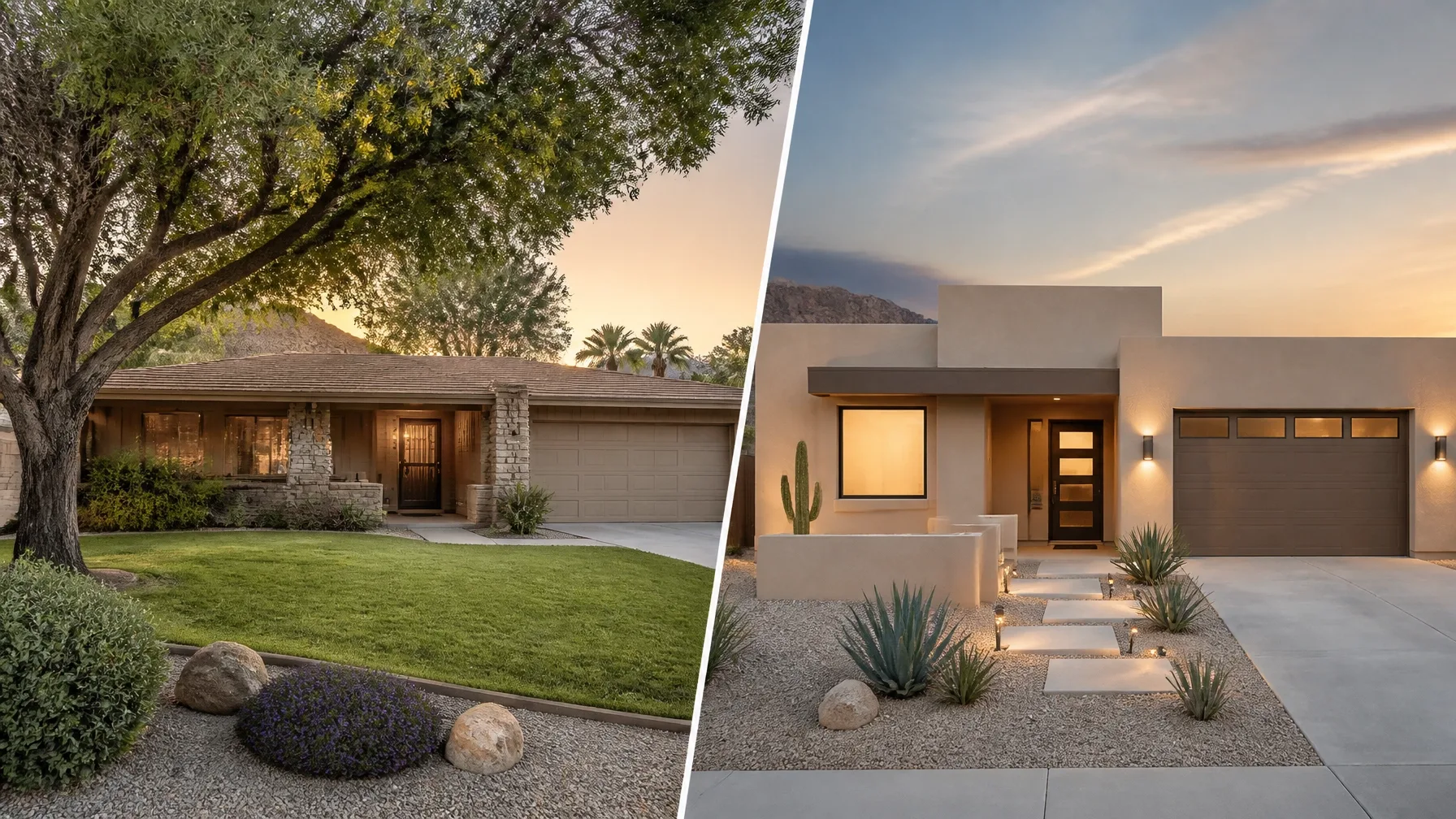
Chronological age tells you when a home was built, and that is genuinely useful. It signals the era of construction, the likely materials, and the age of the major systems if they have not been replaced. But it does not tell you how the home was maintained, what has been upgraded, or what remains at the end of its useful life. A 2005 home with an original air conditioner and a neglected roof can carry more near-term cost than a 1995 home where the systems were replaced on schedule.
In Arizona's climate, the useful life of major systems is heavily influenced by heat exposure and maintenance. Air conditioners work hard for months each year. Roofs bake in direct sun. Water heaters sit in hot garages. The result is that condition, not the year on the title, drives the near-term cost picture.
What is deferred maintenance, and how do you estimate it?
Deferred maintenance is the work that was put off: the roof that should have been serviced, the HVAC that was never tuned, the caulking and flashing that failed years ago. It is a cost you can estimate once you know what is actually wrong. The sequence is simple and it works from out of state:
- A licensed home inspector performs an in-person inspection and produces findings with photographs and descriptions.
- Qualified, licensed contractors review the specific findings and provide written estimates for the defined scope.
- You add the estimates to the purchase price and compare homes on total cost, not list price.
The estimates are the point: they convert a scary unknown into a range you can budget against. They are not quotes, and they are not guarantees. A contractor's estimate can move when the work reveals more, which is exactly why the budget should carry a contingency.
How should an out-of-state buyer build the relocation budget?
Treat the budget as a stack of separate numbers. The purchase price is one. Closing costs are another. Immediate repair and replacement estimates from the inspection are a third. A contingency reserve for what the work reveals is a fourth. And the ongoing costs, property tax, insurance, HOA fees, and utility patterns in a desert climate, are a fifth. Buyers who stack all five numbers before comparing homes rarely get surprised; buyers who compare only price often are.
Remaining useful life is the forward-looking version of the same question. A roof with five years left is a different cost picture than a roof with twenty, even if both pass today's inspection. Ask the inspector and the contractors to estimate remaining life where they reasonably can, and put the answer in the budget as a scheduled future cost rather than pretending it does not exist.
What can and cannot be done remotely?
Nearly every step of buying from out of state runs remotely: video tours, disclosure review, inspection reports, contractor estimates, and e-signature closings. What cannot be done remotely is the diagnosis itself. A video tour shows you finishes and light; it cannot tell you whether the roof decking is sound or the evaporator coil is failing. Those are in-person inspection findings, and no honest professional will claim otherwise.
The practical rule: let the inspection and the estimates do the diagnosing, and use your visit, if you make one, for the judgment calls that numbers cannot capture, like the feel of a street or the noise of a neighborhood.
How do age and price interact in the final comparison?
The honest answer is that neither always matters more. A lower-priced older home with deferred maintenance can cost more in year one than a higher-priced newer home with nothing pending, and the reverse is also true when the newer home carries builder-grade systems near the end of their life. The comparison that works is total cost over your planning horizon: price, immediate repairs, scheduled replacements, and the ongoing costs of the specific home. That is a home-to-home comparison, and it is exactly what an inspection, qualified estimates, and a clear budget make possible.
Frequently asked questions
Does a newer home always cost less to maintain than an older one?
No. A well-maintained older home can have fewer immediate repair needs than a newer home with builder-grade systems and deferred maintenance. Chronological age is a starting point, not a verdict; condition, maintenance history, and remaining useful life of the major systems are what an inspection and estimates actually measure.
Can I evaluate a home's condition from out of state?
You can gather a lot remotely: video tours, disclosures, inspection reports, and estimates from local contractors. What you cannot do is diagnose condition from photos or video alone. A licensed home inspector working in person is the step that turns observations into findings, and qualified contractors turn findings into estimates.
What is the difference between an estimate and a quote?
An estimate is a qualified contractor's best calculation of what a defined scope of work will cost, and it can change as the work reveals more. A binding quote is a fixed price for a defined scope, usually with terms about what happens if the scope changes. Neither is a guarantee of the final total, and both should be in writing before work starts.
Related resources
- Relocation guidance Buying from a distance: how the remote and in-person pieces fit together.
- Moving to Arizona: first 30 days A realistic first-month plan for a Phoenix-area home search.
- Arizona home appraisal guide How appraisals work in financed purchases, and what to verify.
- Relocation buyers watching Arizona The durable reasons out-of-state buyers consider Arizona, and the checklist for testing the fit.
- Home buying process The step-by-step process of buying a home in Arizona.
- Book a strategy call Talk through your purchase with a local agent who will lay out the process.
Educational note: this article explains how to evaluate a home's age, condition, and deferred maintenance as separate cost considerations. Nothing here is a valuation, a repair-cost guarantee, an outcome guarantee, or a remote diagnosis of any specific home. Estimates are not quotes, and both change as scope and findings change. Confirm current numbers with licensed inspectors, qualified contractors, your lender, and your tax and insurance professionals before you commit.
Next step
Compare homes on total cost, not just price.
A strategy call with a local agent who knows how inspections, estimates, and Arizona's climate interact can save you from the surprise that out-of-state buyers dread. No pressure, just a plan you can act on.
- Phone
- 623-400-5957
- andrew@clearlysold.com