
Blog · Arizona Lifestyle
The three faces of Buckeye: Verrado, central, and west
Buckeye is among Arizona's largest cities by land area, and it is not one housing market. It is three broad faces: the Verrado master plan against the White Tank Mountains, the historic central core, and the outlying planned communities of the west. This guide compares them on objective housing, structure, and location factors, with no ranking and nothing invented.
 By Andrew Texidor Realtor · Founder, Clearly Sold Updated October 7, 2026
The direct answer
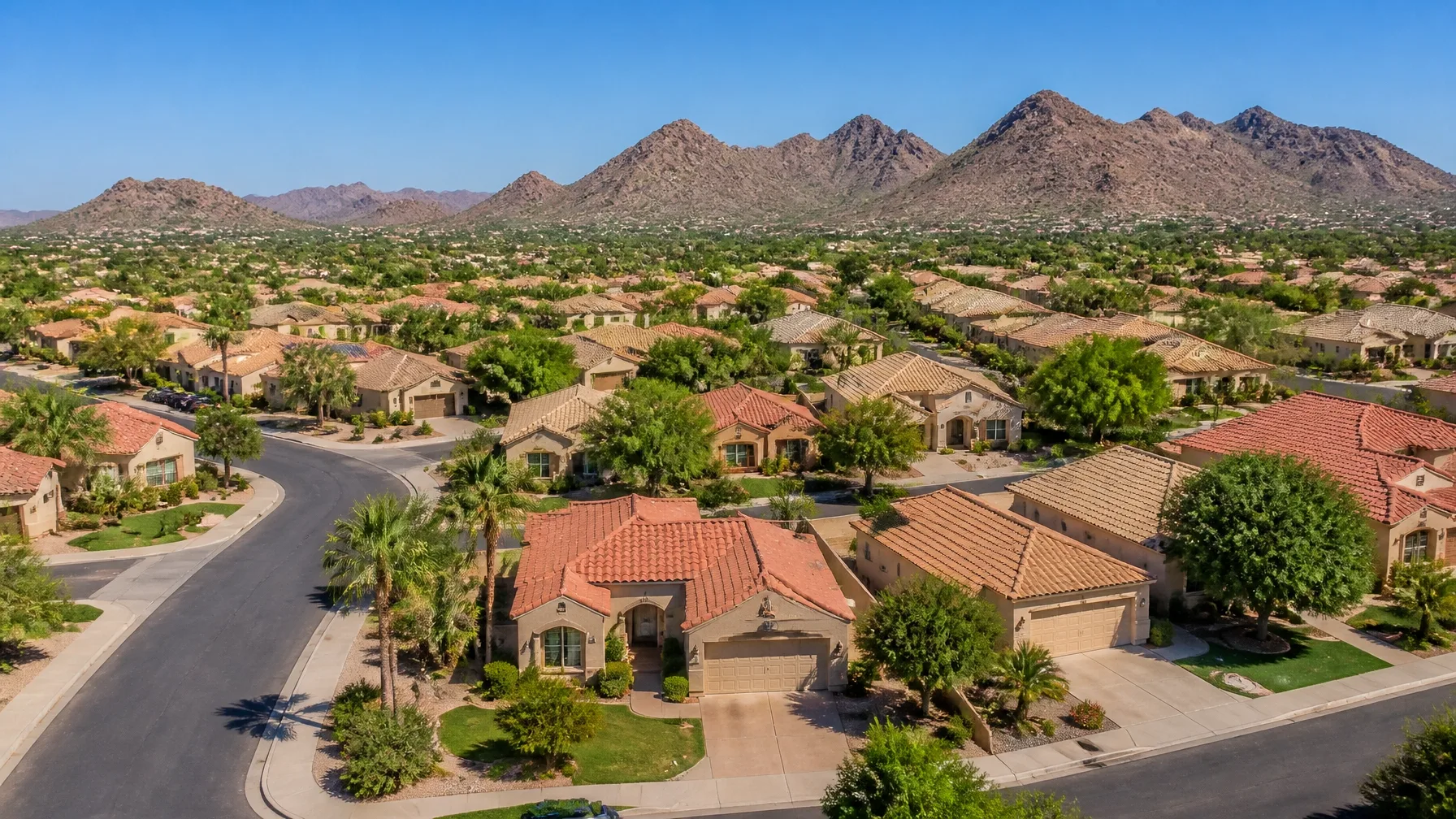
Buckeye is best understood as three broad housing faces rather than one citywide market. Verrado, in the northern part of the city at the base of the White Tank Mountains, is a master-planned community built around its own Main Street with community governance and golf. Central Buckeye is the historic core with the city's oldest housing and traditional commercial corridors. The western face holds the newer outlying planned communities, including Tartesso and Sundance, each with its own HOA and character. They differ in housing age, community structure, fees, and access, and the right fit depends on the household, not on any ranking.
Face by face, at a glance
Face one: Verrado
The flagship master plan: developed by DMB Associates with the first homes sold in 2004, roughly 8,800 acres at build-out, sited at the base of the White Tank Mountains. Its walkable Main Street district, parks, trails, and 36-hole golf club anchor a community-run lifestyle with HOA governance.
Face two: Central Buckeye
The historic core: the original farming-era settlement, with the oldest housing in the city, the traditional commercial corridor along Watson Road, and city services concentrated in the heart of town. Housing here spans decades of build, with newer infill mixed in.
Face three: West Buckeye
The outlying planned communities: newer master-planned developments on and beyond the Sun Valley Parkway corridor, including Tartesso and Sundance, each organized around its own association, fees, parks, and amenities, with a different character per development.
How do the three faces compare on the factors that matter?
| Factor | Verrado | Central | West |
|---|---|---|---|
| Housing age and style | Newer build-out since 2004, with a mix of detached homes and town-style living around the Main Street district | The oldest housing stock in the city, spanning mid-century homes to newer infill | Newer planned communities, with most construction from the 2000s and 2010s onward |
| Community structure | A master-planned community with HOA governance, a town-center retail district, parks, trails, and its own golf club | The traditional city core with city services, commercial corridors, and older neighborhoods not grouped under one master plan | Individual master-planned communities, each with its own HOA, fees, and amenities |
| Setting | At the base of the White Tank Mountains in the northern part of the city | The historic, older core south of the freeway | Outlying planned areas along and beyond the Sun Valley Parkway corridor |
The table is intentionally general: each planned community runs its own HOA with its own fees, rules, and amenities, and the details change. Verify the current fee schedule, reserves, and rules with the specific community before a decision rests on them.
What location and access facts should you weigh?
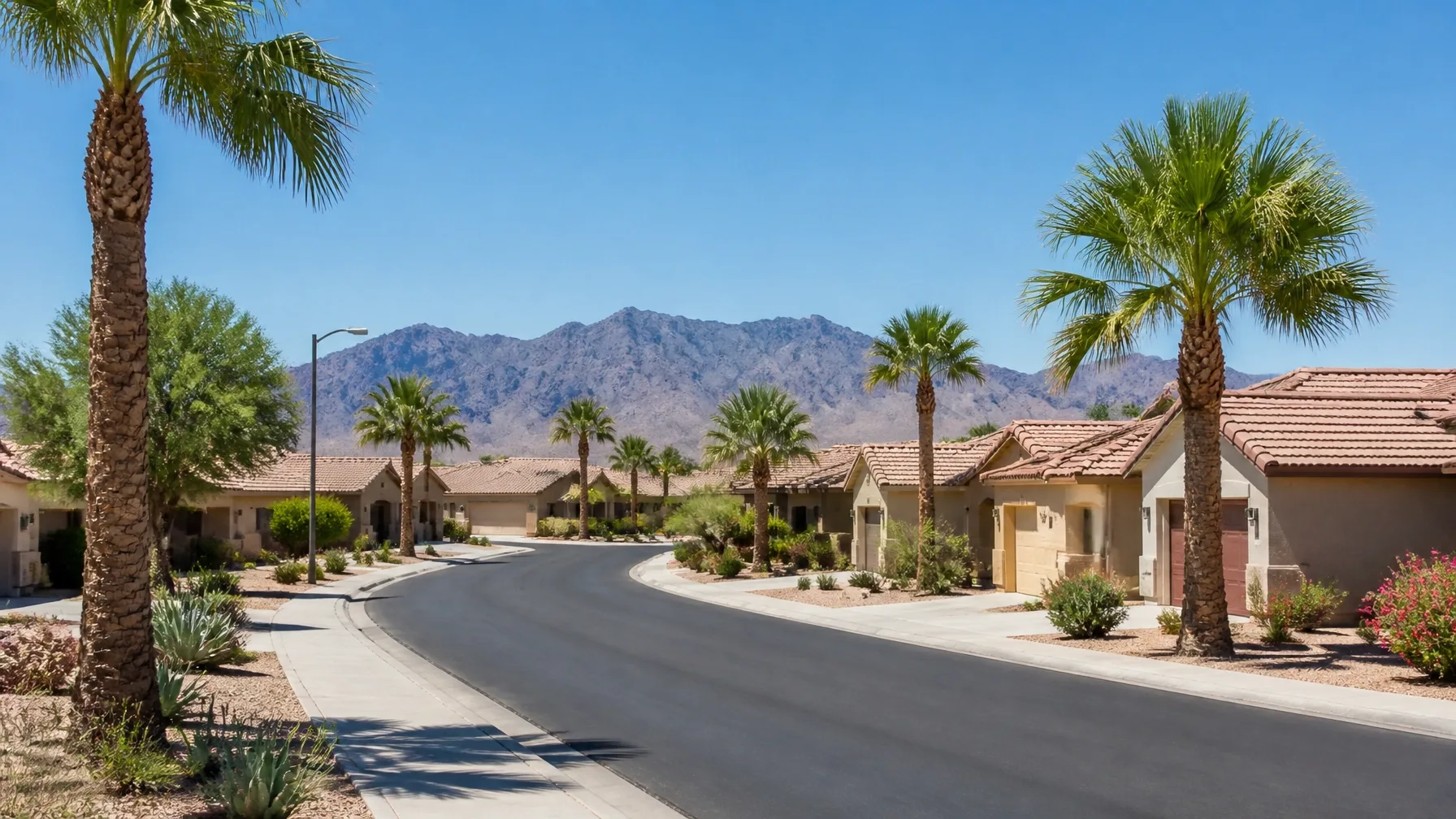
Buckeye is the westernmost city in the Phoenix metro, roughly 30 to 35 miles west of downtown Phoenix, and it sits astride the I-10 corridor that runs through the region. The White Tank Mountains border the north of the city, with the Buckeye Hills to the south. Verrado and the northern communities sit against the mountain foothills; central Buckeye centers on the historic core south of the freeway; and the western planned communities extend along the Sun Valley Parkway corridor.
Distance is a fact; drive time is an experience. The freeways shape daily life, so test the routes at the times you will actually drive them rather than trusting a general rule. The same discipline applies to services: verify what is near each address today, because the commercial mix in a fast-growing city changes quickly.
How do you act on the comparison?
Start with the objective shortlist: housing age and style, community structure, monthly fees, access to the freeway, and the services that matter to your household. Then verify the specifics: current HOA fees and rules with each community, property taxes with the county, and occupancy policies directly with any age-qualified community you consider, because those rules are community-specific and they change.
Then look at the homes themselves. Recent comparable sales price a specific address far more reliably than any description of a whole area, and touring at your own times settles what the maps cannot. Treat this guide as the framing; the address-level verification is the decision.
Consider the tradeoff: master-planned living or the older core
The honest comparison is between the amenities-and-fees model of the planned communities and the older, less structured character of the central core.
Master-planned (Verrado and west)
- Newer homes, planned parks and trails, and consistent community rules.
- Amenities like town centers, golf, and recreation within the community.
- Monthly HOA fees, community district taxes, and association rules add costs and constraints.
Central core
- The city's older housing stock and established commercial corridors.
- Less uniform association structure, which means fewer fees in many cases but more variation.
- Aging homes may carry maintenance and update needs that planned communities have already addressed.
Frequently asked questions
Is Verrado a separate city from Buckeye?
No. Verrado is a large master-planned community within the city of Buckeye, developed beginning in the late 1990s with the first homes sold in 2004, on a plan of about 8,800 acres at build-out. It sits at the base of the White Tank Mountains and runs its own community governance through its associations. Buckeye's city services and zoning apply to it like the rest of the city.
What are the main differences between the three areas?
In general terms: Verrado is a newer, master-planned, amenity-rich community on the north side with its own town center and golf; central Buckeye is the historic core with the city's oldest housing and traditional commercial corridors; and the western planned communities, including Tartesso and Sundance, are newer outlying developments, each with its own HOA, fees, and character. Which fits depends on housing age, community structure, monthly fees, and access, which is why the comparison is a checklist, not a ranking.
Are there age-qualified neighborhoods in Buckeye?
Yes. Several neighborhoods operate as age-qualified communities, including Victory at Verrado and Four Seasons within the Verrado plan, and Sun City Festival in the northern part of the city. Age-qualified communities operate under specific exemptions within fair housing law, and each sets and enforces its own occupancy policy, so verify current eligibility rules, paperwork, and fees directly with each community rather than assuming any general rule.
How should I choose among the three faces of Buckeye?
Compare objective factors side by side: the age and style of the housing, the community structure and its HOA fees and rules, the setting and access to the freeway, and the services nearby. Then verify the specifics for any community you shortlist: current fees, taxes, and occupancy policies with the community, and anything that affects your household with the right professionals. No single face is inherently better; the fit is what matters.
Is Buckeye's growth likely to continue?
Growth is a description of the recent past, not a prediction: census figures document very rapid population growth, and the city reports it remains Arizona's largest by land area with much of its planning area still to be built out. The extent of future growth depends on water, infrastructure, financing, and market conditions that no one can guarantee. For a buyer or seller, treat the growth context as background and make decisions from current comparable sales and the specifics of the home.
Related resources
- Victory at Verrado guide The age-qualified neighborhood inside the Verrado master plan, with fees and rules to verify.
- Four Seasons at Victory at Verrado guide The second age-qualified neighborhood within the Verrado plan.
- Tartesso guide The far-west planned community on the Sun Valley Parkway corridor.
- Sun City Festival guide The Del Webb community at the northern edge of Buckeye.
- Buckeye market update The sourced, dated numbers behind the growth story.
- All community guides The full directory, with fees and rules covered per community.
- Search homes Filter by area and compare what is actually for sale in Buckeye today.
Sources and notes: Community and city facts in this guide are drawn from published, verifiable sources, including the community developers' and the city's own materials, as summarized October 2026. Master-planned communities cited here are described in general terms; each community's HOA fees, rules, and amenities are its own and change over time. Age-qualified communities operate under specific exemptions within fair housing law, and each sets and enforces its own occupancy policy, so verify current eligibility, fees, and availability directly with each community. This guide is a comparison of objective housing and location factors, not advice about where anyone should live, and nothing here is a market prediction or valuation.
Next step
Match the right face of Buckeye to your household
Bring your priorities. We will compare the communities on fees, rules, housing age, and access, pull current comparables for the addresses you like, and leave you with a shortlist you can tour with confidence.
- Phone
- 623-400-5957
- andrew@clearlysold.com