
Blog · Rewarding Heroes
PCS to Luke AFB: neighborhood and BAH planning
Orders to Luke Air Force Base mean learning a new corner of the West Valley fast. This guide keeps the planning objective: where the base sits, how the surrounding cities compare on access, housing, and lifestyle, and exactly what to verify with the housing office, the finance office, and your own test drives before a single offer.
 By Andrew Texidor Realtor · Founder, Clearly Sold Updated October 7, 2026

The direct answer
Luke AFB sits on the west side of Glendale, in the West Valley of metro Phoenix, and the cities around it, Surprise, Peoria, Glendale, Goodyear, Avondale, and Litchfield Park, each offer different housing types, access routes, and lifestyles at different distances from the gates. The planning that works: verify your benefits and timelines with the military housing office and finance office, build the budget on those verified numbers, then compare neighborhoods on objective factors like commute access, housing types, community amenities, fees, and lifestyle, tested with your own drives at your real reporting times.
Key takeaways
- Luke sits on the west side of Glendale; Surprise, Peoria, Glendale, Goodyear, and Avondale all ring the base at different distances and access profiles.
- Benefit amounts, timelines, and rules are verified with the military housing office and finance office, never assumed from an article or a friend.
- Gate access decides the practical commute: locations and hours vary by gate and change, so confirm current access with the base.
- Compare neighborhoods on objective factors only: commute access, housing types, community amenities, fees, and lifestyle.
- Rent-first is a legitimate PCS strategy, and so is buying with preparation; the decision rests on verified dates and a well-structured search.
Where exactly is Luke, and how does the base fit the corridor?
Luke Air Force Base sits on the western edge of metro Phoenix, within the city of Glendale and roughly a dozen-plus miles west of downtown Phoenix. The West Valley cities radiate around it: Surprise to the north and northwest, Peoria to the north and northeast, and Goodyear, Avondale, and Litchfield Park to the south and southeast. Because the base is both an installation and a major employer, its gates and the roads leading to them structure commutes for thousands of households in every direction around it.
The access picture matters more than the map distance. Litchfield Road runs north from the I-10 corridor to the base and serves the Lightning Gate, the primary public gate on the west side, while Loop 101 connects to the Glendale Avenue route used to reach the South Gate area. The base operates multiple gates with different schedules, and hours change, so confirm current gate locations and access with the base or its housing office before planning a commute around any one of them.
The surrounding cities, on objective factors
The comparison below stays on the factors that apply to any household: access corridors, housing types, community amenities, and lifestyle. What it does not do is rank areas for who belongs there; that decision belongs to your routine, your budget, and your own test drives.
Surprise
Sits north and northwest of the base along the Loop 303 and U.S. 60 corridors, with a wide mix of newer master-planned and traditional subdivisions, recreation-focused communities, and a substantial active adult segment.
Peoria
Lies north and northeast of the base, served by Loop 101 and U.S. 60, running from established neighborhoods in the south to newer master plans in the north, with a strong family-oriented recreation system.
Glendale
The base's home city, wrapping its west side, with established housing stock nearest the installation, a range of price points, and the shortest theoretical door-to-gate logistics for many routes.
Goodyear and Avondale
South and southeast of the base along I-10, with newer master plans, employment growth, and a different corridor experience than the northern routes, and a growing commercial core along the freeway.
Litchfield Park
Directly adjacent to the base area with an established, tree-lined character, older and newer housing, and a quiet, small-town feel close to the installation.
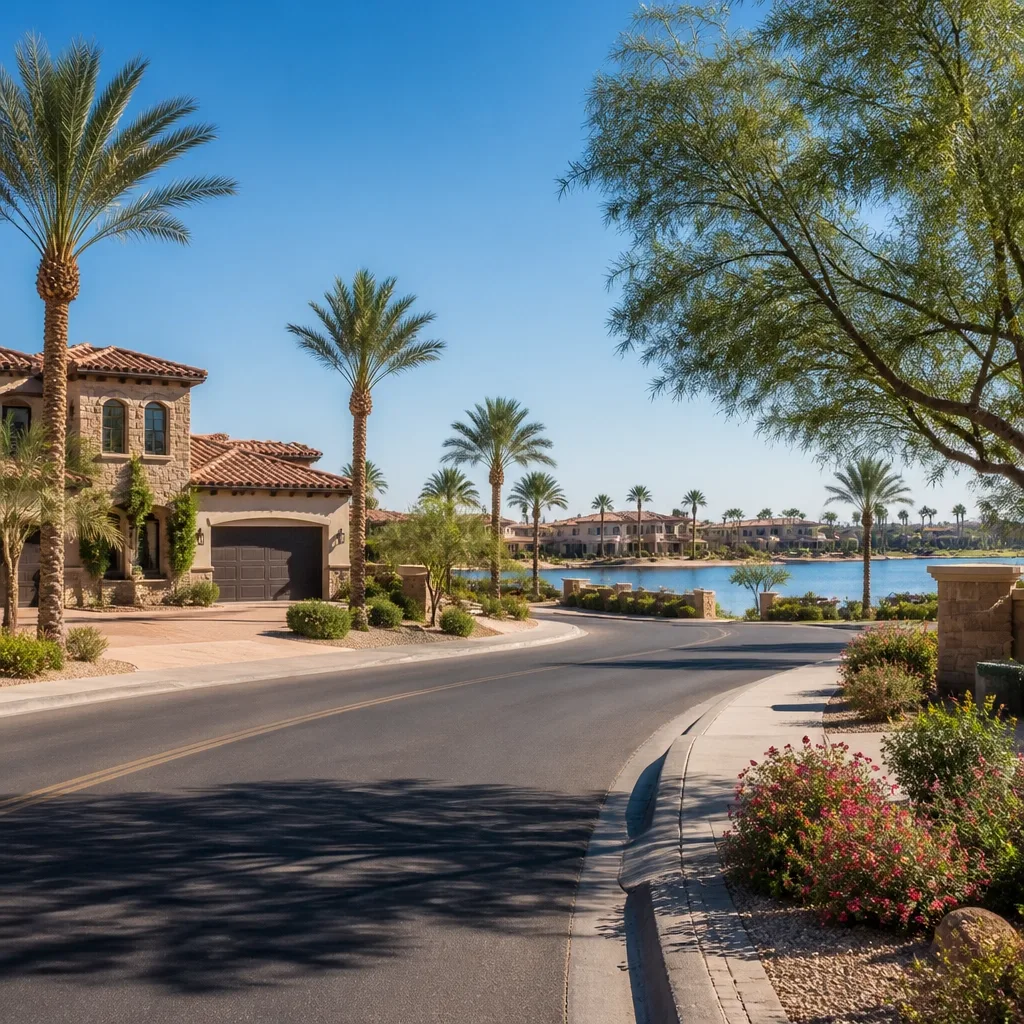
Each of these is a starting description, not a verdict. City limits contain a full range of housing, prices, and HOA structures, so the neighborhood-level comparison, from the community guides and current listings, always beats the city-level summary.
How should the search start when the PCS date is fixed?
Work backward from your known dates: the reporting date, the amount of temporary housing you have, the school calendar if it applies, and the months of overlap you can tolerate. That produces a deadline, and the deadline drives the search structure: when you must be settled, what can close by then, and whether a rental bridge is part of the plan.
Then build the two-column comparison: verified benefits and timeline numbers on one side, and neighborhood facts on the other. Benefits, BAH rates, eligibility, and documentation are all verified with the military housing office and finance office, because they change and this article offers no advice on them. Neighborhood facts come from community guides, HOA documents, and your own drives; every yellow-flag item in either column gets resolved before any contract depends on it.
Rent first or buy first at a new station?
Both are legitimate, and PCS is the classic case for renting first: you learn the corridor, verify the real commutes, and tour neighborhoods without a purchase deadline hanging over a move you have not made yet. Buying first makes sense when your dates are firm, the search is well prepared, and the cost of an extra move and a bridge rental outweighs the pressure of the first months. The deciding inputs are verified timeline and benefit numbers, plus the current rental and resale markets, and a professional read of both.
What should you verify, and with whom?
Military housing and finance offices
Current benefit rates, eligibility, documentation, timelines, and how benefits interact with renting versus buying. These offices are the authority; articles and forums are not.
The base and the community
Gate locations and hours, and for each community: HOA fees and rules, school information if it matters, and current taxes and insurance estimates.
Your lender and title company
Pre-approval in writing, remote closing logistics, and the exact signature and document requirements for a purchase coordinated around a PCS timeline.
Frequently asked questions
Which West Valley cities are closest to Luke AFB?
Luke sits on the west side of Glendale, with Surprise to the north and northwest, Peoria to the north and northeast, and Goodyear, Avondale, and Litchfield Park to the south and southeast. Distance from the gates varies by city and by which gate you use, so the honest comparison is door-to-gate at your actual reporting times, not city-to-base as the crow flies.
What are the main roads to the base?
Litchfield Road runs north from the I-10 corridor to the base and serves the Lightning Gate, the primary public gate on the base's west side. Loop 101 (the Agua Fria Freeway) connects to Glendale Avenue, which leads west to the South Gate area. The base operates multiple gates with different hours, so confirm current gate locations and hours with the base or its housing office, because they change.
Should I rent first when PCSing to Luke?
Many arriving families rent first, and it is a defensible choice: it buys time to learn the corridor, verify commutes at real times, and tour without a deadline. Buying first works when the PCS dates are fixed and the search is well prepared, but it concentrates the risk. Weigh the PCS funding timeline, the rental market, and the number of unknown variables together, and confirm benefits and timelines with the military housing office and finance office.
How should BAH factor into the home search?
BAH is a benefit with current rates, rules, and documentation requirements that change, and this article does not advise on it. What it can say: treat any benefit amount as a number to verify with the military housing office and finance office, build the budget around the verified figure, and confirm how it interacts with your specific housing choice before any contract depends on it.
Is the West Valley commute-friendly for base access?
The corridor is built around the same freeway system that serves the base: I-10, U.S. 60, Loop 101, and Loop 303. Commute-friendliness depends entirely on your gate, your reporting time, and your route, which is why the standard advice applies harder here: drive the route at your actual time, in both directions, before choosing a neighborhood.
Related resources
- Home buying process The step-by-step path to an Arizona purchase, from pre-approval to keys.
- Relocation guidance Buying from a distance, with the remote and in-person pieces sorted.
- Areas we serve The West Valley mapped by commute, housing, and lifestyle factors.
- Community guides Master-planned communities across the corridor, with fees and rules.
- Search homes Browse current West Valley listings and filter by the areas you shortlist.
- First responder buying guide The same consumer-first process, written for public-safety professionals.
Educational note: this article describes the general geography and real estate context around Luke AFB. It is not military-benefits, legal, tax, lending, or financial-planning advice. Benefit rates, eligibility, gate hours, rules, and programs change; verify current information with the military housing office, the finance office, the base, and the appropriate professionals before making any decision. Neighborhood descriptions are objective starting points, not rankings or endorsements.
Next step
Plan the PCS move with verified numbers
Bring your dates and your shortlist. We will help you structure the search around your reporting timeline and show you the corridor on objective factors, so the plan is built on evidence.
- Phone
- 623-400-5957
- andrew@clearlysold.com